
Introduction:
Companies are adopting modern technology practices and implementing electronic signatures with strong encryption to simplify document workflows. However, every electronic signature is different in terms of legal validity. If your business requires high-level document security, a Qualified Electronic Signature (QES) stands as the best business standard.
Whether it’s the finance, legal, or healthcare industries, compliance and security are essential. Hence, gaining complete knowledge of QES is important. In this blog, we have covered what is QES & how it differs from other types of electronic signatures, the legal validity of QES, and how eSigns supports secure & compliant e-signature workflows.
What is a Qualified Electronic Signature (QES)?
A Qualified Electronic Signature is the highest legal form of electronic signature under the European eIDAS regulation. A QES is issued through a qualified digital certificate, backed by an authorized Trust Service Provider, and it holds the same legal standing as a handwritten signature.
How QES Differs from a Standard eSignature?
The difference between a qualified electronic signature and an advanced electronic signature comes down to three factors:
- Legal status: QES is legally binding by default across the EU; AES and SES may hold up too, but only with proof of intent and authenticity.
- Identity verification: QES needs verified ID through a Qualified Trust Service Provider; whereas AES depends on SMS codes or two-factor authentication; SES needs little more than a typed name.
- Security: QES uses a qualified certificate supported by strong cryptography. AES offers moderate encryption and audit trails; SES has minimal built-in protection.
Types of Electronic Signatures Explained
Before diving deeper into QES, let us look at the full range of electronic signatures businesses actually use every day. Not every document needs top-tier security, and knowing which tier fits which use case saves both time and unnecessary friction.
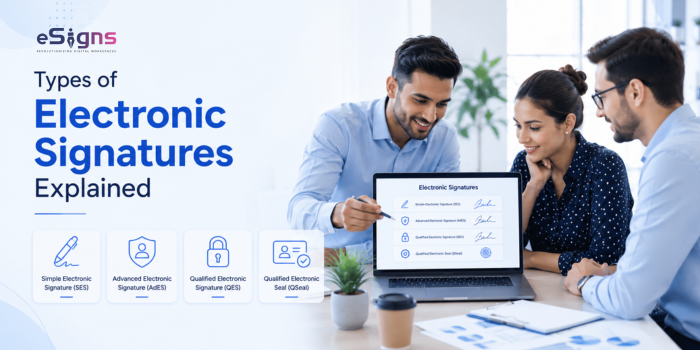
- Simple Electronic Signature (SES): This type is the basic form of eSignature, where an individual intends to agree, which means clicking on ‘I accept.’ It’s easy but comes with fewer security features. Hence, it fits best for low-risk documents.
- Advanced Electronic Signature (AES): One of the safest eSignature types is AES. It verifies the signer’s identity and safeguards the paper from being modified after e-signing. For businesses that require higher trust and proof while signing legal documents, the AES electronic signature type is the go-to option.
- Qualified Electronic Signature (QES): It is the most secure and legally valid type of eSign, which is equivalent to a handwritten signature under the law. QES uses a digital identity verification certificate for highly confidential and regulated documents.
How Does a Qualified Electronic Signature Work?
A qualified electronic signature (QES) works easily by using various security techniques to verify the signer’s identity and achieve tamper-proof documents. Let’s explore the key elements of QES, which make it secure and legally authorized.
The Role of Digital Certificates:
Each QES is tied to a qualified digital certificate – think of it as a verified digital ID card that confirms exactly who signed. Once issued, that certificate is bound to the document itself, so any attempt to alter the file after signing gets flagged immediately.
Trust Service Providers (TSPs) and Identity Verification:
Before any certificate goes out, an accredited Trust Service Provider runs identity checks – sometimes a live video call, sometimes government ID verification, occasionally an in-person appointment depending on the jurisdiction. This step is really the backbone of QES.
Public Key Infrastructure (PKI) Explained Simply:
PKI works through two mathematically linked keys – one private, one public – that lock and then verify the signature. All you really need to know is what makes forging a QES practically pointless, because any tampering breaks the mathematical link and shows up instantly.
Legal Validity of Qualified Electronic Signatures
Ensuring legal compliance is important in digital transactions, especially in enterprises such as banking, legal, finance, and healthcare. Hence, understanding the legal validity of QES is necessary.
QES Under the eIDAS Regulation (EU)
Under eIDAS, a QES is legally equivalent to a handwritten signature in every EU member state – no exceptions, no interpretation needed by individual courts. That’s a meaningful difference from lower-tier signatures, which can sometimes require extra evidence if a dispute comes up later.
Global Recognition and Cross-Border Compliance
QES started as a European standard, but its influence has spread well beyond EU borders — many international businesses now use it as a benchmark for cross-border deals where legal certainty can’t be left to chance. If your company regularly works with European partners or clients, this is worth understanding before it becomes a problem, not after.
Qualified Electronic Signature vs. Digital Signature: Key Differences
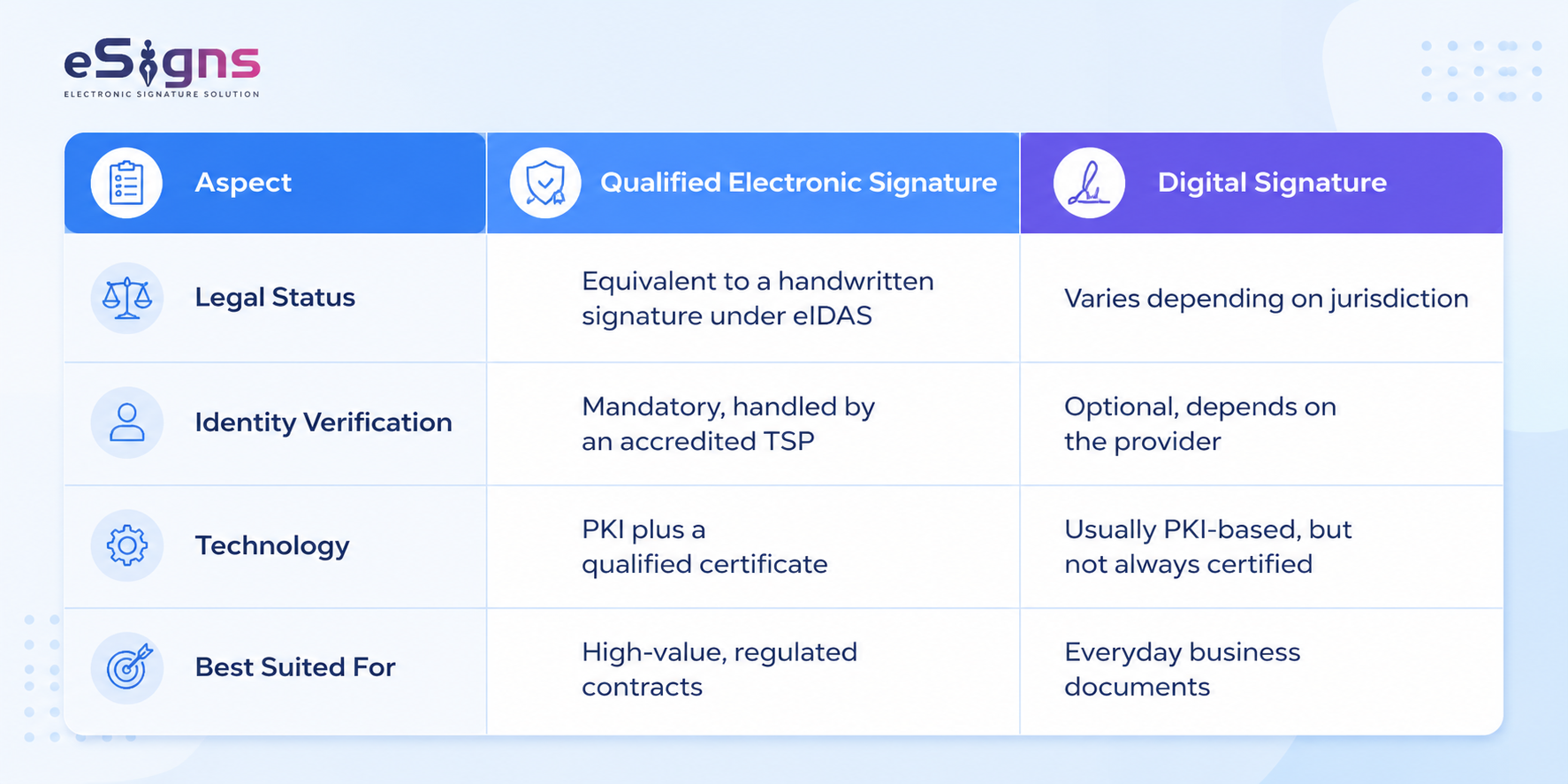
Learn the difference between electronic signature vs digital signature with our easy-to-follow guide
When Do You Need a Qualified Electronic Signature?
The requirement for QES comes when you want to verify the signer’s identity and protect confidential documents from data breaches. Do check out the following ones for better understanding:
Industries and Use Cases That Require QES
Not every document needs this level of protection. A vendor invoice, an internal approval, a routine NDA – a basic eSignature manages these just fine. But certain use cases of eSignature call for it without question: real estate closings, government filings, and large corporate agreements where the risk of identity fraud is genuinely high.
Qualified Signatures in Financial Services Contracts
Banks and lenders tend to sit at the strictest end of the spectrum, and it makes sense why. Well-built eSignature for financial services workflows lean on QES to satisfy regulators, all while keeping the customer onboarding experience fast and frustration-free.
Qualified Signatures in Staffing and Employment Contracts
Staffing firms move fast and handle a lot of sensitive paperwork at once. Bringing QES-level verification into eSignature for staffing contracts cuts down disputes around identity, which matters a lot more when you’re onboarding remote or contract talent you’ve never met in person.
How eSigns Supports Secure, Compliant Signature Workflows
eSigns EDMS helps companies streamline the document creation to document signing workflows in a secure and compliant way. Have a glance at a few modern features of eSigns.io and improve your business productivity.
Best-in-Class eSignature Service Features
A strong eSignature service shouldn’t stop at “letting people sign things.” Look for analytics, detailed audit trails, and compliance reporting that give your team real visibility into every document, not just a signed PDF sitting in a folder somewhere.
Free eSignature Tools to Get Started
If you’re still testing the waters, there’s no reason to commit to a full platform on day one. Free eSignature software tools let you trial a workflow, get your team comfortable, and figure out what you actually need before spending a dollar.
Built-In Risk Management Across eSignature Platforms
Security can’t be bolted on after the fact — it has to be part of the foundation. The better eSignature platforms build risk management directly into the signing flow, catching anomalies before they turn into expensive problems down the road.
Ready-to-Use eSignature Forms for Faster Data Collection
Signatures aside, a lot of the slowdown in business paperwork comes from data entry. Pre-built eSignature forms cut that friction out entirely, speeding up intake and approvals without adding extra steps for your team or your clients.
Conclusion
Qualified Electronic Signature isn’t something you need for every contract crossing your desk – and that’s fine. But when identity assurance and legal certainty genuinely matter, there’s no real substitute. As more industries shift toward fully digital agreements, understanding exactly where QES fits into your workflow is an important task for businesses.
For a wider look at how electronic signing is evolving this year, our eSign guide 2026 is a good next read.
FAQs
Q1. Is a Qualified Electronic Signature legally binding?
A. Yes. Under eIDAS, a QES carries the same legal weight as a handwritten signature and is automatically treated as valid evidence in court.
Q2. What is the difference between QES and Advanced Electronic Signature (AES)?
A. AES verifies identity and seals the document against tampering. Whereas QES goes a step further with a mandatory identity check by an accredited Trust Service Provider and a qualified certificate, giving it stronger legal standing.
Q3. Does eSigns support Qualified Electronic Signatures?
A. Yes, eSigns eSignature Software supports secure, compliance-ready signature workflows built to meet strict identity verification and regulatory requirements across industries.
Q4. Which industries are legally required to use QES?
A. Banking, real estate, government services, and certain high-value corporate transactions frequently require QES due to fraud-prevention and regulatory standards.
Q5. How do I verify a QES certificate is valid?
A. Valid QES certificates come only from accredited Trust Service Providers, and most offer a certificate validation service you can check directly.
Q6. What are the benefits of using QES for your business?
A. Lower fraud risk, stronger legal enforceability, and a level of trust with partners and clients that’s hard to match with any other signature type.